The Freight Forwarder That Cost One Importer $40,000
You found the perfect supplier in Japan. Negotiated a sharp price. Felt good about the deal. Then the shipment sat at the port for three weeks because your freight forwarder filed the wrong customs documentation. Detention fees piled up. Your buyer canceled the order. And the forwarder? Stopped returning calls.
This isn’t a horror story made up for effect. It happens every month to importers who chose a freight forwarding company based on the lowest quote alone.
Choosing the right freight forwarding company is one of the most consequential decisions a business can make. In 2026, that decision is harder than ever. The global shipping landscape is still absorbing the aftershocks of the Red Sea crisis, port congestion at major Asian hubs remains a real operational headache, and carriers are adjusting capacity faster than most shippers can track.
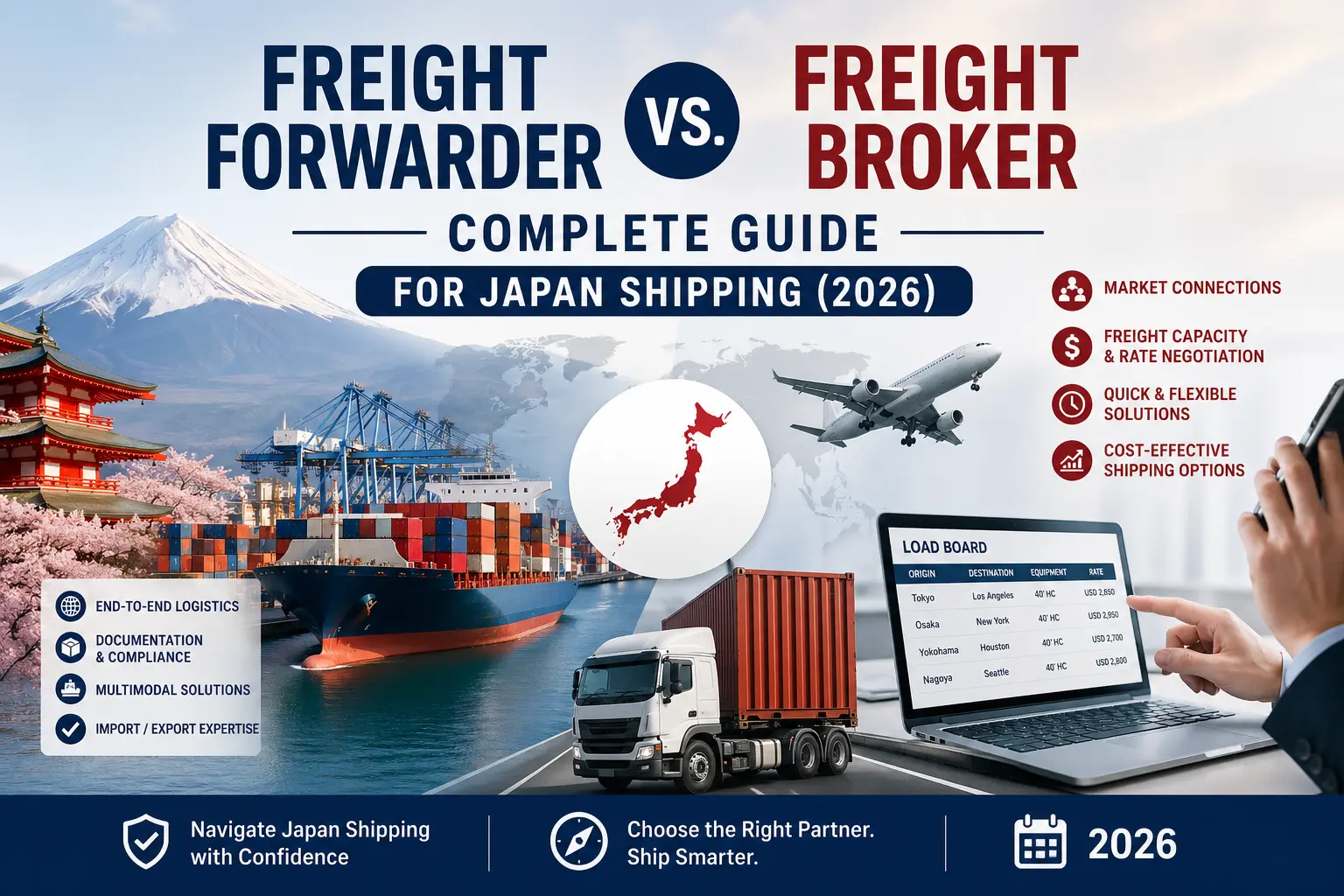
This guide breaks down the top 10 freight forwarding companies in the world, what separates the great from the average, and how to pick the right partner for your specific trade lane, whether you’re moving goods from Japan to the USA or sourcing from China to Europe.
What Is a Freight Forwarding Company?
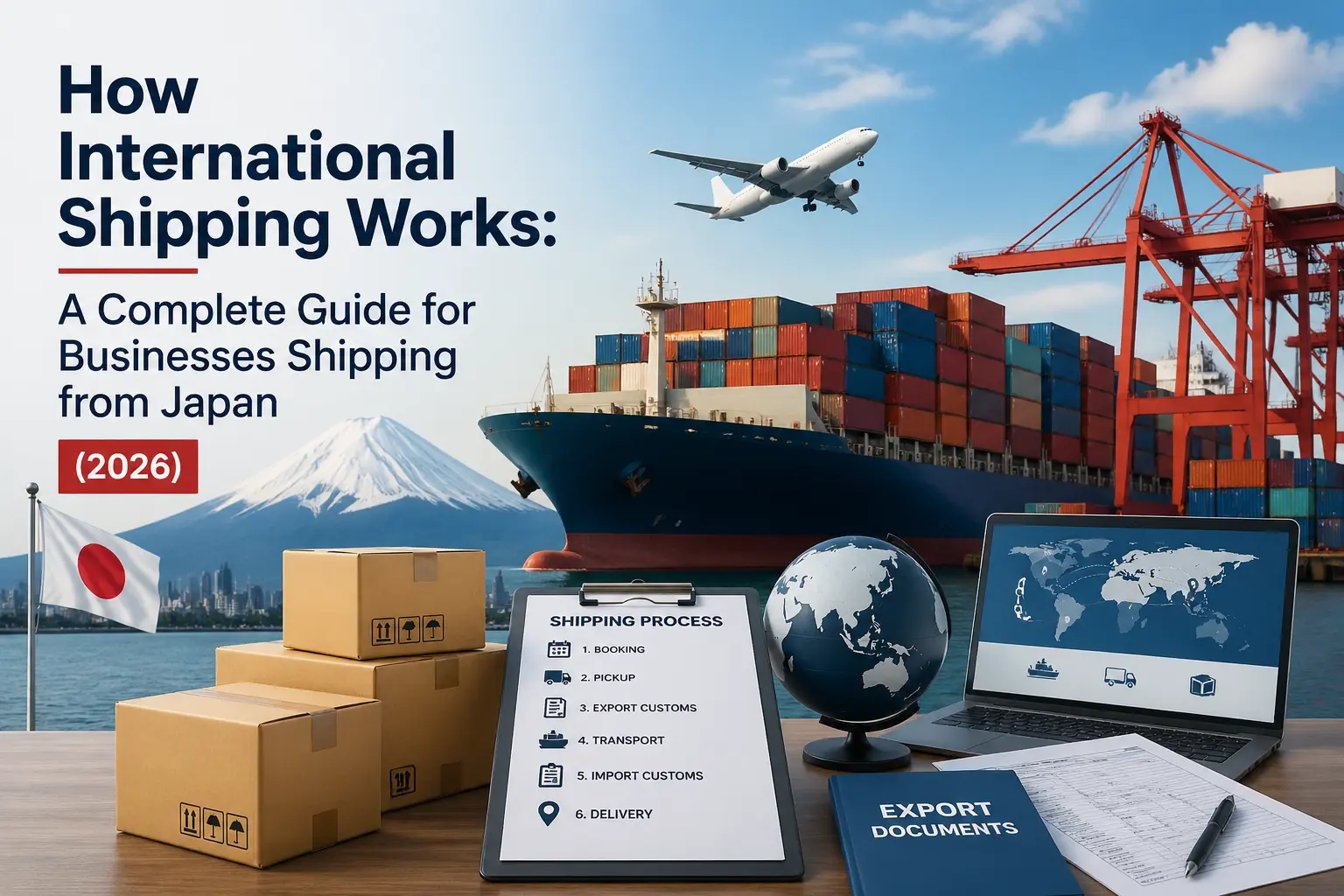
Think of a freight forwarder as your logistics project manager. They don’t actually sail the ship or fly the plane. Instead, they coordinate every piece of the puzzle that gets your cargo from Point A to Point B.
A freight forwarder arranges transportation on your behalf, handles documentation, negotiates rates with carriers, manages customs clearance, and often provides warehousing and inland delivery. A carrier (like a shipping line or airline) physically moves the cargo. A customs broker specifically handles import and export compliance. Many top freight forwarding companies offer all three functions under one roof, which is exactly what you want.
A few terms worth knowing:
- FCL (Full Container Load): You fill an entire container. Best for large shipments.
- LCL (Less than Container Load): Your cargo shares a container with others. Perfect for smaller volumes.
- NVOCC (Non-Vessel Operating Common Carrier): A forwarder who issues their own bills of lading and consolidates cargo from multiple shippers. This gives you better rates and flexibility without owning ships.
The best freight forwarders don’t just move boxes. They protect your margins, keep your timelines intact, and make international trade feel less like a gamble.
Why Choosing the Right Freight Forwarder Matters More in 2026
The supply chain world has changed dramatically, and not all freight forwarding companies have kept up.
Post-pandemic volatility isn’t over. Carrier alliances are reshuffling. Equipment imbalances still affect certain trade lanes. Spot rates can spike 300% in a matter of weeks when a disruption hits, and if your forwarder doesn’t have solid carrier relationships, you’ll be last in line for space.
The Red Sea crisis changed the game. Since late 2023, Houthi attacks on commercial vessels forced most carriers to reroute around the Cape of Good Hope, adding 10 to 14 days and significant fuel costs to Asia-Europe voyages. A forwarder without real-time route intelligence could leave your cargo stuck mid-route with no contingency plan.
Port congestion at Asian hubs is real. Ports like Shanghai, Busan, and Singapore have seen rolling congestion throughout 2025 and into 2026. A freight forwarder with local port relationships can often secure earlier vessel slots and avoid demurrage charges piling up.
New environmental regulations are reshaping cost structures too. IMO’s Carbon Intensity Indicator ratings and the EU Emissions Trading System now apply to shipping and are adding surcharges that inexperienced forwarders fail to disclose upfront. You’ll see them on your invoice later, and by then it’s too late to negotiate.
A bad freight forwarder doesn’t just cause delays. They cost you customers, penalties, and a lot of sleep.
Key Services to Look for in a Top Freight Forwarding Company
Not every forwarder offers every service. Here’s what a truly full-service company should bring to the table and why each one matters.
Ocean Freight (FCL and LCL) The backbone of global trade. Whether you’re moving a full container or consolidating smaller shipments, your forwarder needs strong carrier contracts and a reliable LCL consolidation network.
Air Freight For time-sensitive cargo or high-value goods. Critical when ocean schedules fail or your customers need faster delivery windows.
Inland Transportation and Drayage Getting cargo from the port to the warehouse or final destination. This last-mile piece is where costs often balloon unexpectedly. You want a forwarder who controls this in-house.
Customs Clearance and Pre-export Inspections Incorrect HS codes, missing certificates, wrong valuations. Any of these can trigger holds, fines, or seizure. Experienced customs teams are non-negotiable.
Warehousing and Yard Management Temporary storage, sorting, labeling, and kitting for Amazon FBA prep. The more your forwarder can handle under one roof, the less handoff risk you face.
NVOCC and Consolidation Services Especially valuable for SMEs. NVOCC status means your forwarder can issue their own bill of lading and offer more flexible, competitive rates on consolidated shipments.
Real-time Shipment Tracking In 2026, “we’ll check and get back to you” is not acceptable. You need live visibility into your cargo’s status at all times.
Multilingual Support Particularly vital on Japan trade lanes, where documentation is often in Japanese and local regulatory nuances matter enormously.
Top 10 Freight Forwarding Companies in the World (2026)
1. Kuehne + Nagel
Headquarters: Schindellegi, Switzerland | Founded: 1890
Kuehne + Nagel is consistently ranked among the world’s largest freight forwarding companies by airfreight and sea freight volume. With operations in over 100 countries and more than 80,000 employees, they handled approximately 4.6 million TEUs of sea freight in 2025.
Best for: Large enterprises with global, complex supply chains
2026 Update: Continued expansion of their KN FreightNet digital platform, enabling real-time rate booking and shipment visibility for ocean freight clients.
Pros: Unmatched global network, strong digital tools, excellent for high-volume multimodal shipments
Cons: Less personalized for SMEs, premium pricing, can feel slow and bureaucratic for smaller shippers
2. DHL Supply Chain and Global Forwarding
Headquarters: Bonn, Germany | Founded: 1969
Part of Deutsche Post DHL Group, DHL Global Forwarding operates in 220-plus countries, the broadest reach of any forwarder on this list. Their 2025 revenue from forwarding and supply chain divisions exceeded 20 billion euros.
Best for: E-commerce companies, multinationals, pharmaceutical shippers
2026 Update: DHL accelerated its GoGreen Plus sustainability program, offering clients carbon-neutral shipping options using sustainable aviation fuel and green ocean certificates.
Pros: Widest global coverage, industry-leading tracking technology, strong in regulated industries
Cons: Not cost-competitive for smaller shipments, limited customization, service quality varies by region
3. DB Schenker
Headquarters: Frankfurt, Germany | Founded: 1872
DB Schenker is Europe’s largest logistics company and has been particularly aggressive on sustainability, committing to carbon-neutral logistics by 2040. That’s increasingly attractive to ESG-conscious shippers.
Best for: European shippers, automotive industry, sustainability-focused supply chains
2026 Update: DB Schenker completed its sale to DSV in late 2025, creating what will be the world’s largest freight forwarding group once integration is finalized.
Pros: Best-in-class European land network, strong automotive expertise, genuine green logistics commitment
Cons: Asia-Pacific presence less developed, integration with DSV creates uncertainty in 2025, less flexible for specialized cargo
4. DSV
Headquarters: Hedehusene, Denmark | Founded: 1976
DSV has become one of the most aggressive acquirers in logistics history, absorbing UTi Worldwide, Panalpina, and now DB Schenker. Post-acquisition, DSV is positioned to command revenues exceeding 30 billion euros and a presence in 90-plus countries.
Best for: Shippers who need a single global provider across all transport modes
2026 Update: Integration of DB Schenker is the defining story for DSV in 2025, adding 72,000-plus employees and massive European road freight capacity.
Pros: Rapidly growing global network, competitive pricing at scale, strong project cargo capabilities
Cons: Integration risk during the merger, service consistency can dip during major acquisitions, less specialized for Japan-specific trade
5. Expeditors International
Headquarters: Seattle, USA | Founded: 1979
Expeditors owns no planes, no ships, and no warehouses. Their entire value proposition is brokerage power, relationships, and financial discipline. They’ve posted consistent profitability even through industry downturns.
Best for: Mid-to-large US importers, retailers, consumer goods companies
2026 Update: Expeditors deepened its customs brokerage automation tools, reducing clearance times by an average of 18% on major US import lanes.
Pros: Highly transparent financials, exceptional customs brokerage, strong US import infrastructure
Cons: Asset-light model means less capacity control during crunches, less competitive on Asia-origin LCL, premium pricing for smaller volumes
6. Nippon Express
Headquarters: Tokyo, Japan | Founded: 1937
Japan’s largest logistics company and a major force across the Asia-Pacific corridor. Nippon Express operates in 48 countries with particular depth in Japan-origin exports, automotive logistics, and temperature-controlled pharmaceutical freight.
Best for: Companies sourcing from or exporting to Japan, automotive supply chains
2026 Update: Nippon Express launched its NX-Plus digital forwarding platform for SME clients, targeting faster quotes and booking on Japan-to-USA and Japan-to-EU routes.
Pros: Deepest Japan-origin expertise of any global forwarder, excellent cold chain and pharma capabilities, strong Japanese customs authority relationships
Cons: Premium pricing on non-Japan trade lanes, less competitive on China-origin shipments, large corporate structure can mean slower response for smaller clients
7. GEODIS
Headquarters: Paris, France | Founded: 1904
GEODIS, owned by SNCF Group, is a top-ten global forwarder with particular strength on the Europe-Asia corridor. Their road, ocean, air, contract logistics, and distribution divisions make them genuinely multimodal.
Best for: European importers and exporters, fashion, retail, and consumer goods sectors
2026 Update: GEODIS expanded its Asia-Pacific hub network with new warehousing capacity in Singapore and South Korea, targeting growing Southeast Asia trade volumes.
Pros: Excellent Europe-Asia trade lane expertise, strong warehousing and value-added services, solid ESG credentials
Cons: Less dominant outside Europe-Asia corridors, pricing less competitive than Asian-owned forwarders on transpacific lanes, customer service responsiveness varies
8. Sinotrans
Headquarters: Beijing, China | Founded: 1950
Sinotrans is China’s state-backed logistics giant, deeply integrated into China’s Belt and Road Initiative trade infrastructure. With government backing, they have unparalleled access to Chinese port operations and carrier capacity.
Best for: Importers and exporters with heavy China trade volumes, especially on China-Europe routes
2026 Update: Sinotrans expanded its China-Europe rail freight corridors, positioning itself as the leading forwarder for the growing intermodal market on that route.
Pros: Unbeatable China-origin relationships and port access, competitive rates due to scale, growing rail infrastructure
Cons: Less competitive outside China-centric trade lanes, limited personalization for complex cargo needs, transparency concerns for compliance-focused shippers
9. Hellmann Worldwide Logistics
Headquarters: Osnabrück, Germany | Founded: 1871
Hellmann is one of the most underrated names in global freight forwarding. Operating in 173 countries, they punch well above their size in terms of SME-friendliness and service flexibility. If you’re a growing business that needs a global forwarder without getting lost in corporate bureaucracy, Hellmann deserves serious consideration.
Best for: SMEs, growing e-commerce companies, healthcare shippers
2026 Update: Hellmann launched a dedicated e-commerce logistics vertical targeting cross-border sellers, including Amazon FBA prep and last-mile delivery integration.
Pros: SME-friendly service model, 173-country network unusual for a mid-size forwarder, strong healthcare expertise
Cons: Smaller carrier relationships than top-five players, less competitive on high-volume ocean lanes, digital tools less developed than DHL or Kuehne + Nagel
10. UFI Shipping
Headquarters: Japan | Specialty: Japan trade lanes, global ocean freight
UFI Shipping is a Japan-based freight forwarding company built specifically for businesses that need precision, transparency, and real human communication, not a ticket number in a global call center queue.
Where the global giants excel at volume, UFI Shipping excels at relationships. Their team manages ocean freight, drayage, inland transportation, warehousing, customs clearance, and NVOCC/LCL consolidation services. Everything under one roof, with direct accountability at every step.
Best for: SMEs, importers sourcing from Japan, e-commerce sellers, businesses entering the Japanese market
2026 Update: UFI Shipping expanded its LCL consolidation services on Japan-to-USA corridors, offering more frequent consolidation windows and faster transit options for mid-sized shippers.
Pros: Deep Japan-specific customs expertise, personalized service from real experts, competitive rates on Japan-origin LCL and FCL, full-service from origin port to destination delivery
Cons: Smaller global footprint than top-five players, best suited for Japan-centric trade lanes
📦 Shipping from Japan or to Japan? Get a free freight quote from UFI Shipping
How to Choose the Best Freight Forwarding Company for Your Business
Most businesses make the mistake of choosing a freight forwarder on price alone. Price matters, but it’s maybe the fifth most important factor. Here’s what to actually evaluate.
Do they specialize in your trade lane? A forwarder brilliant at China-Europe rail is not necessarily equipped for Japan-USA LCL. Ask specifically about their volume and track record on your exact route.
Are they licensed and certified? Look for FIATA membership, JIFFA affiliation for Japan, IATA accreditation for air cargo, and local customs broker licenses in both origin and destination countries.
Do they offer door-to-door service? Port-to-port is cheaper. Door-to-door is safer. A good forwarder can do both and will advise you on which makes sense for your shipment type.
Is their pricing genuinely transparent? Ask for a fully itemized quote. If you see “TBD” or “local charges at destination” without explanation, push back. That’s where hidden fees live.
Can you track your shipment in real time? In 2026, real-time visibility is table stakes. If their answer is “we’ll send weekly email updates,” that’s a red flag.
Do they have experience with your cargo type? Hazmat, perishables, oversized project cargo, lithium batteries, alcohol. Each has specific regulatory and handling requirements. Don’t assume your forwarder knows them.
Do they have local expertise at both ends? A forwarder with a physical presence or a strong local agent network at both origin and destination will handle customs surprises far better than one operating remotely.
Can they provide references from similar businesses? Ask for two or three client references in your industry or on your trade lane. A confident, reputable forwarder will provide them without hesitation.
Japan as a Global Freight Hub — Why It Matters
Japan is the world’s third-largest economy, and its role in global trade often gets underestimated. Major ports including Yokohama, Kobe, Nagoya, and Tokyo handle tens of millions of tonnes of cargo annually, serving as critical nodes in the Asia-Pacific supply chain.
Japan-to-USA trade is a massive and growing corridor covering automotive parts, electronics, pharmaceuticals, machinery, food products, and consumer goods. Japan-to-EU trade is similarly significant, particularly in high-value manufacturing components.
Here’s what makes Japan-specific freight forwarding genuinely different. Japanese customs procedures are detailed. Documentation requirements are precise. Certain categories of goods including food, pharmaceuticals, and agricultural products require specific certifications that differ from Chinese or Korean requirements. A forwarder without Japan-specific experience will make mistakes that cost you real time and real money.
Japan also has unique language considerations. Much official documentation is in Japanese, and navigating relationships with Japanese carriers, port authorities, and customs officials requires genuine local knowledge. This is exactly where a Japan-based freight forwarding company like UFI Shipping provides an advantage that no global mega-forwarder can replicate from a regional office in Singapore or Hong Kong.
Red Flags to Avoid When Hiring a Freight Forwarding Company
Choosing wrong is expensive. Here’s what should immediately raise alarm bells.
No verifiable physical office or license number. If you can’t confirm their address and credentials independently, walk away.
Vague pricing with unexplained charges. Every legitimate fee can be itemized and explained upfront.
No tracking visibility. Any forwarder operating in 2026 without real-time shipment tracking is operationally behind.
Slow or evasive communication. If they take 48 hours to respond during the sales process, imagine what happens when your shipment is stuck at customs.
No experience on your specific trade lane. General logistics experience doesn’t automatically transfer. Trade lane knowledge is earned through volume and real relationships.
UFI Shipping — Your Trusted Freight Partner in Japan
UFI Shipping was built around a straightforward philosophy: make it easier and cheaper for businesses to go global. That sounds simple. In practice, it means showing up with real answers, honest pricing, and solutions rather than excuses.
Based in Japan, UFI Shipping offers a genuinely complete forwarding solution covering ocean freight (FCL and LCL), drayage and inland transportation, customs clearance with Japan-specific expertise, warehousing and yard management, and NVOCC and LCL consolidation services ideal for SMEs and e-commerce sellers.
What makes UFI Shipping different isn’t just the service list. It’s the fact that when you have a question, a real expert picks up. Multilingual support. Transparent quotes. No runaround. Whether you’re importing Japanese machinery, exporting products into Japan, or building an Amazon FBA supply chain through a Japanese supplier, UFI Shipping has the local depth and global connectivity to make it work.
Conclusion
The right freight forwarding company isn’t just a vendor. It’s a strategic partner that protects your margins, keeps your customers happy, and helps your business scale internationally without the constant anxiety of wondering where your shipment is.
In 2026, with supply chains still navigating Red Sea disruptions, port congestion, new environmental surcharges, and carrier capacity volatility, that partnership matters more than ever.
The big global names on this list have unmatched scale. But scale doesn’t always mean the right fit for your business. If you’re operating on Japan trade lanes, sourcing from Japanese suppliers, or shipping goods to Japan, what you need is local expertise, direct accountability, and a forwarder who actually picks up the phone.
That’s UFI Shipping.
Ready to ship smarter? Contact UFI Shipping today
Frequently Asked Questions
1. What is the largest freight forwarding company in the world?
Kuehne + Nagel has historically held the top spot by sea and air freight volume. However, following DSV’s acquisition of DB Schenker in late 2024, DSV is positioned to become the world’s largest freight forwarder by combined revenue and network scale once the integration is complete.
2. How do freight forwarding companies make money?
Freight forwarders earn revenue through service fees, margins on carrier rates they negotiate in bulk, customs brokerage fees, warehousing and handling charges, and in some cases, fuel surcharge margins. NVOCC-status forwarders also capture additional margin on their consolidation services by issuing their own bills of lading.
3. What is the difference between a freight forwarder and a shipping company?
A shipping company, or carrier, physically owns and operates the vessels, aircraft, or trucks that move cargo. A freight forwarder arranges transportation on your behalf. They coordinate carriers, handle documentation, manage customs clearance, and provide end-to-end logistics management. Think of the carrier as the driver and the freight forwarder as the trip planner.
4. How much does freight forwarding cost in 2026?
Costs vary significantly by trade lane, cargo type, mode, and market conditions. As a rough guide, LCL ocean freight from Japan to the US West Coast typically ranges from $80 to $150 per CBM depending on volume and season. FCL rates on the same lane range from approximately $1,200 to $2,500 per 20-foot container. Air freight from Japan to the US runs approximately $4 to $8 per kilogram for general cargo. Always request a fully itemized quote that covers origin charges, ocean or air freight, destination charges, and customs fees.
5. Which freight forwarding company is best for Japan shipments?
For Japan-specific trade lanes, a Japan-based forwarder with genuine local expertise will consistently outperform global generalists. UFI Shipping specializes in Japan-origin and Japan-destination freight, offering ocean freight, LCL consolidation, customs clearance, drayage, and warehousing with Japan-specific regulatory knowledge and multilingual support. For volume-heavy enterprise shippers, Nippon Express is the largest Japan-origin option. For SMEs and growing businesses, UFI Shipping offers a more personalized and cost-competitive alternative.